Introduction
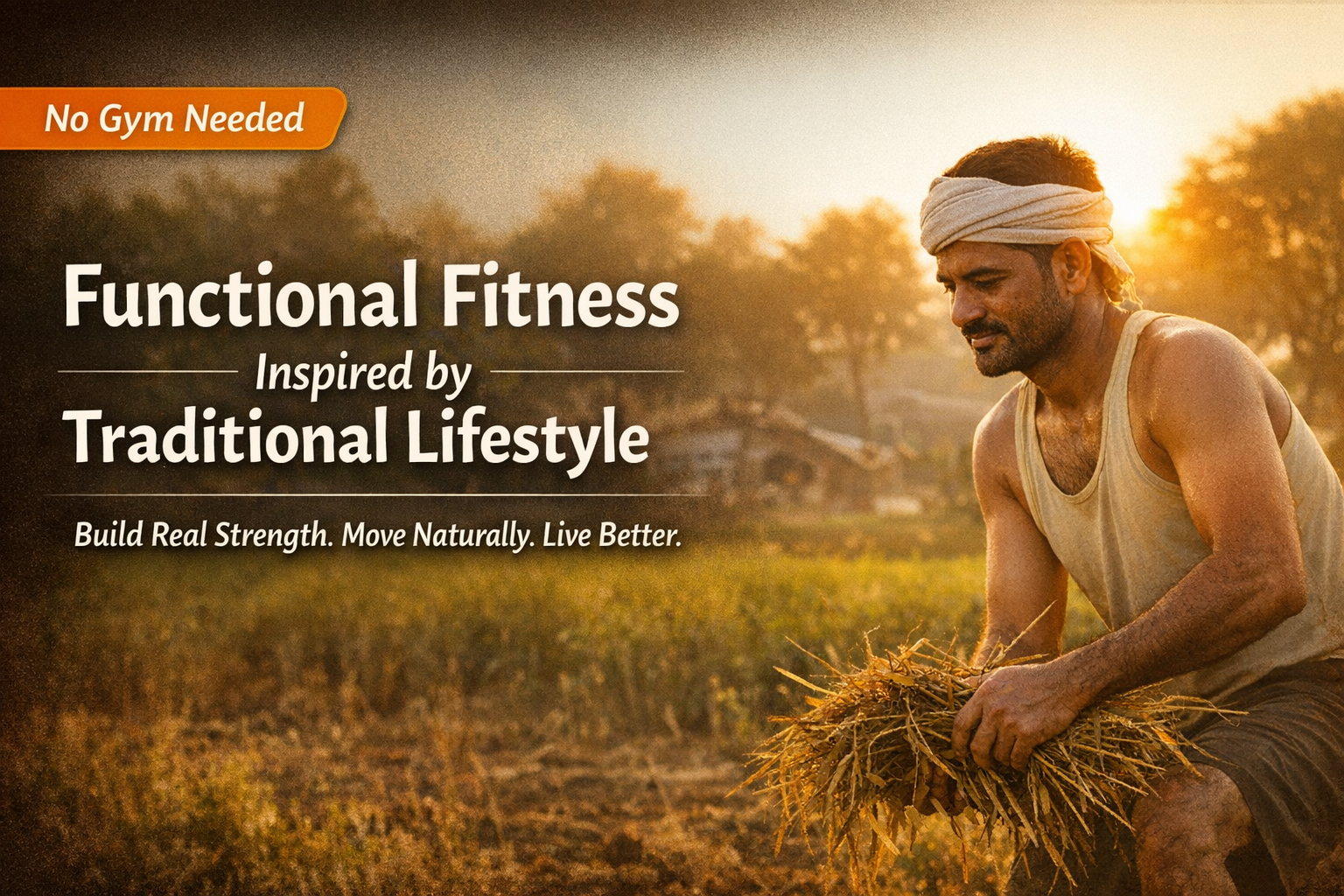
Functional fitness inspired by traditional lifestyle may sound like a fancy idea, but it is actually something our grandparents did every day — without dubbing it “fitness.”
Think about it.
They didn’t go to gyms. They didn’t keep track of reps or follow workout regimens. Yet they were robust, dynamic and seldom kicked up a fuss about back pain or stiffness like so many do today.
Why?
Because their workout was their daily life.
They walked more. They squatted naturally. They carried things. They sat on the floor. They moved constantly.
Somewhere in the course of human evolution we swapped out all that natural motions for chairs, screens and convenience. And now we’re trying to “fix” it with structured workouts.
This is precisely where functional fitness influenced by traditional lifestyle comes into play — it’s not about adding more exercise. It’s about going back to something your body already knows.
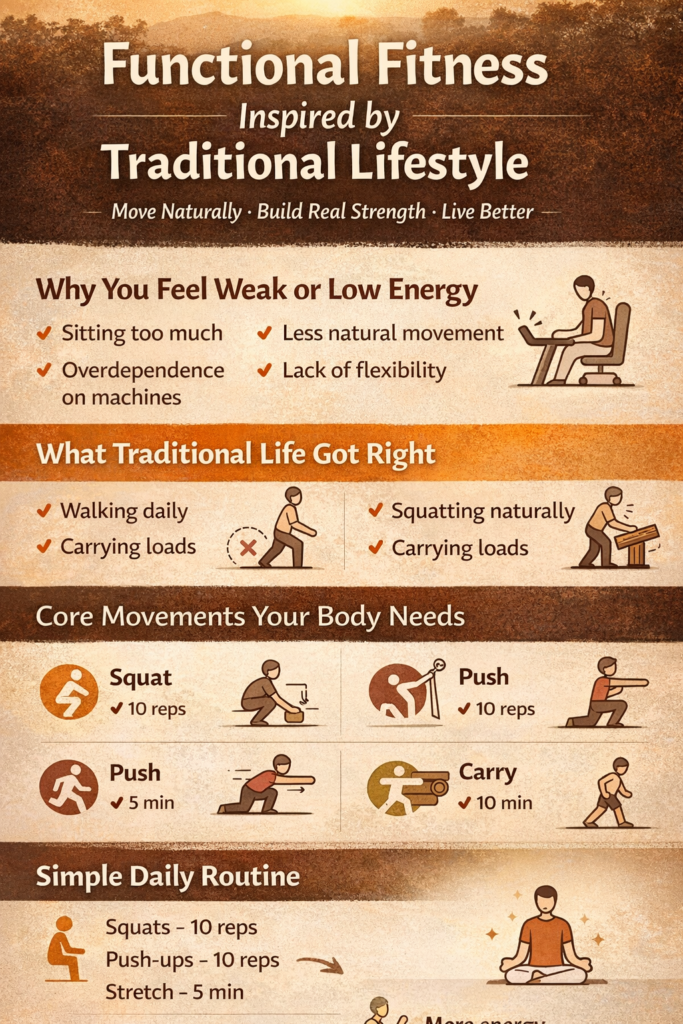
Table of Contents
What Functional Fitness Really Is (And Isn’t, Overly Complicated)
Let’s keep this simple.
Essentially, functional fitness is just training your body to perform real-world movements more effectively.
Not just pumping iron in a gym—but:
- Picking up groceries without strain
- Sitting and standing comfortably
- Walking without getting tired
- Bending without pain
That’s it.
Add this to natural habits, and functional fitness based on traditional lifestyle starts becoming what you live rather than what you schedule.
A Quick Reality Check
You could exercise for an hour every day…
…but if you sit the next 10–12 hours, your body still feels stiff and low in energy.
That’s the problem.
We weren’t made for “one workout + all-day sitting.”
They are built for continual, natural motion.
This is why inspiring functional fitness focuses on how you live your day, e.g. traditional lifestyle — rather than simply what you do in a workout.
What Traditional Life Did Right (Accidentally)
Here are some simple daily habits from the old way of life:
- Dogs sitting on the floor instead of chairs
- Squatting instead of using toilets/chairs
- Q: You mentioned that you are a pedestrian in your daily life.
- Carrying water, groceries, or tools
- Doing household work manually
None of it had been deemed exercise—but it was building:
- Strength
- Flexibility
- Endurance
So, that is the basis for functional fitness based on a traditional lifestyle.
Why Modern Fitness Feels… Incomplete
It may feel a bit heavy-handed, but it’s a fact.
Modern fitness often focuses on:
- Looking fit
- Building isolated muscles
- Short bursts of intense workouts
But that is not how real life works.
In the controlled gym environment, you don’t lift things. You move unpredictably. You twist, bend, carry, reach.
So this is why someone can be gym fit, and yet still very much have difficulty with:
- Back pain
- Tight hips
- Low mobility
Low-tech, functional fitness rooted in traditional lifestyle fills the void.
A Shift: “Workout” to “Way of Living”
This is the mindset change:
Don’t ask: “Was I active today?
Question: “Did I move enough today?”
That one shift changes everything.
How This Looks in Real Life: A Few Simple Steps
You don’t need a big plan. Start small.
Walk More (A Lot More Than You Think)
Not just for exercise — but as part of your routine.
- Sublime; Walk and Talk on the Phone
- Walk to nearby places
- Take stairs when possible
[SEE MORE OF THE EASIEST FORMS OF FUNCTIONAL FITNESS BASED ON TRADITIONAL LIFESTYLE]
Start Squatting Daily
This is huge.
Even a few squats a day:
- Improve mobility
- Strengthen legs
- Support joints
And that begins to feel natural again, over time.
Sit on the Floor Sometimes
It can feel uncomfortable at the beginning — and that’s the idea.
It:
- Improves flexibility
- Engages muscles
- Reduces stiffness
Carry Things Yourself
Use effort instead of avoiding it.
- Carry groceries
- Lift small loads
- Use your body
These smallest of efforts create real strength.
Add Simple Bodyweight Movements
You don’t need a gym.
Just:
- Push-ups
- Squats
- Lunges
- Planks
They support functional fitness inspired from simple lifestyle without complicating it.
An Easy, Daily Flow (No Pressure Routine)
If you crave structure, keep it light:
Morning (10–15 mins):
- Squats
- Push-ups
- Stretching
During the day:
- Walk often
- Avoid long sitting
Evening:
- Light stretching or relaxation
That’s enough.
What You’ll Start Noticing
Give it a few weeks.
You’ll likely feel:
- Less stiffness
- Better posture
- More natural energy
- Easier movement
Not subtle overnight magic but steady, tangible improvement.
And that’s the beauty of functional fitness based on ancestral lifestyle.
Common Mistakes (Easy to Avoid)
- Trying to do too much at once
- Ignoring daily movement
- Prolonged Sitting after your workouts
- Expecting quick results
It is a slow way—but it endures.
Who This Is Perfect For
Honestly… almost everyone.
Especially:
- People with desk jobs
- Beginners who feel overwhelmed
- Anyone tired of complicated routines
Because it is simple & adaptable functional fitness inspired by traditional lifestyle.
The Most Important Thing About Everything That No One Gets
Rest matters too.
For traditional lifestyles, there was a natural equilibrium:
- Activity during the day
- Proper rest at night
Don’t ignore recovery.
The functional fitness inspired by the traditional lifestyle isn’t a return — it’s about taking what worked and adapting it to modern life.
You don’t have to handle everything flawlessly.
Just:
- Move more
- Sit less
- Use your body naturally
That’s enough to start.
And over the years, you come to know something elementary yet powerful:
Your body does not need crazy workouts.
It simply requires steady, organic movement.
What is functional fitness inspired by traditional lifestyle?
The traditional lifestyle-inspired functional fitness is an intuitive way of working out, concentrating on everyday activities such as walking, squatting, bending, and carrying. It does not involve using gym machines; it involves body movements that involve real life activities to develop strength, mobility and endurance.
How is functional fitness different from gym workouts?
Gym exercises usually work to isolate particular muscles with the use of machines, whereas functional fitness works to train your entire body to move in real life. Traditional lifestyle-based functional fitness enhances the daily movement of your body, rather than its appearance.
Can beginners follow functional fitness inspired by traditional lifestyle?
Yes, absolutely. This style is ideal in the novice category since it emphasizes on natural basic movements. No previous experience, equipment or gym membership are required to begin.